Buyers are starting to delegate campaign planning to AI agents. Passion+ shipped a partner-facing MCP server so those agents can plan deals with us directly, while the humans keep control of the money.
Every tool in programmatic advertising assumes there's a human on the other side. Dashboards, seat licenses, onboarding calls, training videos: the whole industry is built around teaching people to click buttons.
That assumption is starting to break. Buyers already delegate research to AI assistants, and the delegation keeps moving up the stack: drafting media plans, comparing audiences, pressure-testing a forecast before a deal desk ever sees it. The person still owns the campaign, but the first pass isn't theirs anymore. This is the same thing that's already happened to every other knowledge workflow, and media buying is next because it runs on numbers, rules, and deadlines.
An agent doesn't want a demo or a nicer dashboard. It wants an endpoint. So instead of waiting to see whether buyers adopt agents, we built for the ones who already have.
Let their agents plan the deals
As of this week, Passion+ partners can connect their own AI agents directly to the platform through MCP, the open protocol AI assistants use to talk to software. A partner's agent can search audiences, check inventory, build a media plan, and evaluate it against a brief. Then the buyer's team reviews what the agent assembled, fixes what's wrong, approves what's right.
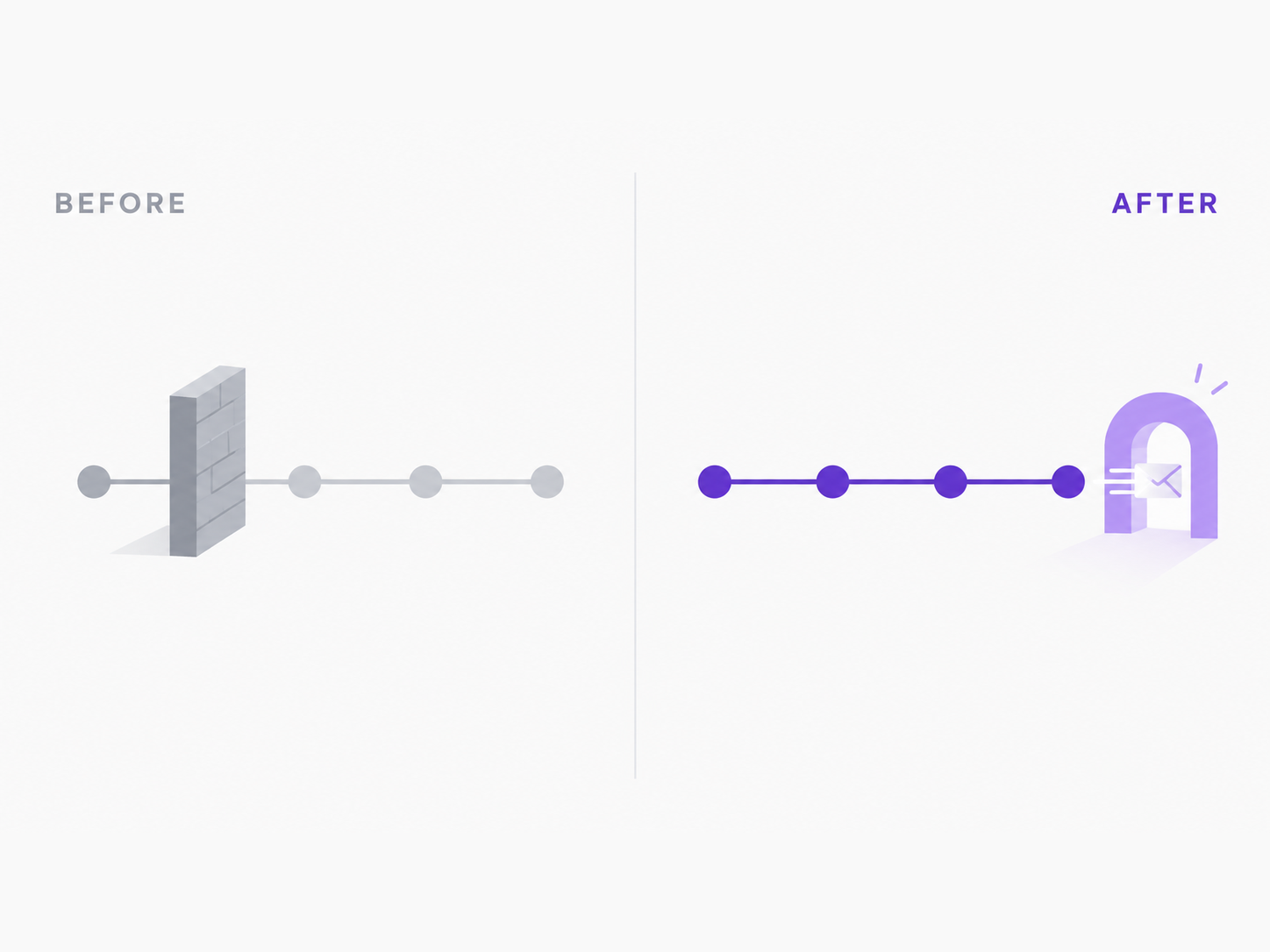
The practical difference is simple. A planning cycle used to start with someone logging into a dashboard and end in an exported spreadsheet. Now it starts with a brief typed into a tool the buyer already lives in, and the answers come back in minutes. It runs on an open standard rather than a proprietary API, so partners aren't locked into anything. The same agent integration works across any platform that speaks the protocol.
We do this internally first. Passion+'s own launch wizard runs on the same protocol. Our team already works this way, and that's a large part of why we were confident shipping it outward.
What agents can't do here
Pioneering is only half the job. The other half is being trustworthy enough to pioneer in front of clients. The rules on our side are simple and firm:
No agent spends money on our platform. Everything an agent can touch is read-and-plan. Nothing launches, buys, reserves, or commits. Those actions stay behind human approval, on the partner's side as much as ours. An agent can bring you a plan. It can't bring you an invoice.
Numbers come with their receipts. Every figure an agent reads carries what it's based on and how confident we are in it. When numbers combine, the total is only as strong as its weakest input. If a total is missing a piece, we say so instead of letting it look quietly smaller. That way an agent summarizing our data for a buyer can't strip the uncertainty out of it by accident.
Partners see partner data. Each agent gets redacted planning data for its own account, never anyone else's identifiers or internals.
The dashboard era is ending quietly
Nobody will hold a funeral for the campaign dashboard. Buyers will just notice that platforms answering in seconds through their assistant feel like 2030, while the ones asking them to log in and learn buttons feel like 2015. Platforms that speak protocol will get the agents' business, and increasingly the humans those agents work for.
We'd rather shape that future than wait for it. If you're a Passion+ partner, your agent is welcome here already. And if you're a platform wondering whether to build this surface before or after your competitors do: now, while it's still the differentiator.
Let's build your deal.
Need something specific? We can layer additional targeting for your brand's unique strategy, including audience segments, geographies, shopper behavior, content contexts, and more. Just ask!
We ran $500 of display ads to our own landing page and watched what 150 clicks did with our funnel. Cold traffic ignored 'Book a Demo,' so we rebuilt the Fashion Wizard journey around one input — your brand's URL — and moved the email gate to the end, where there's something worth claiming.
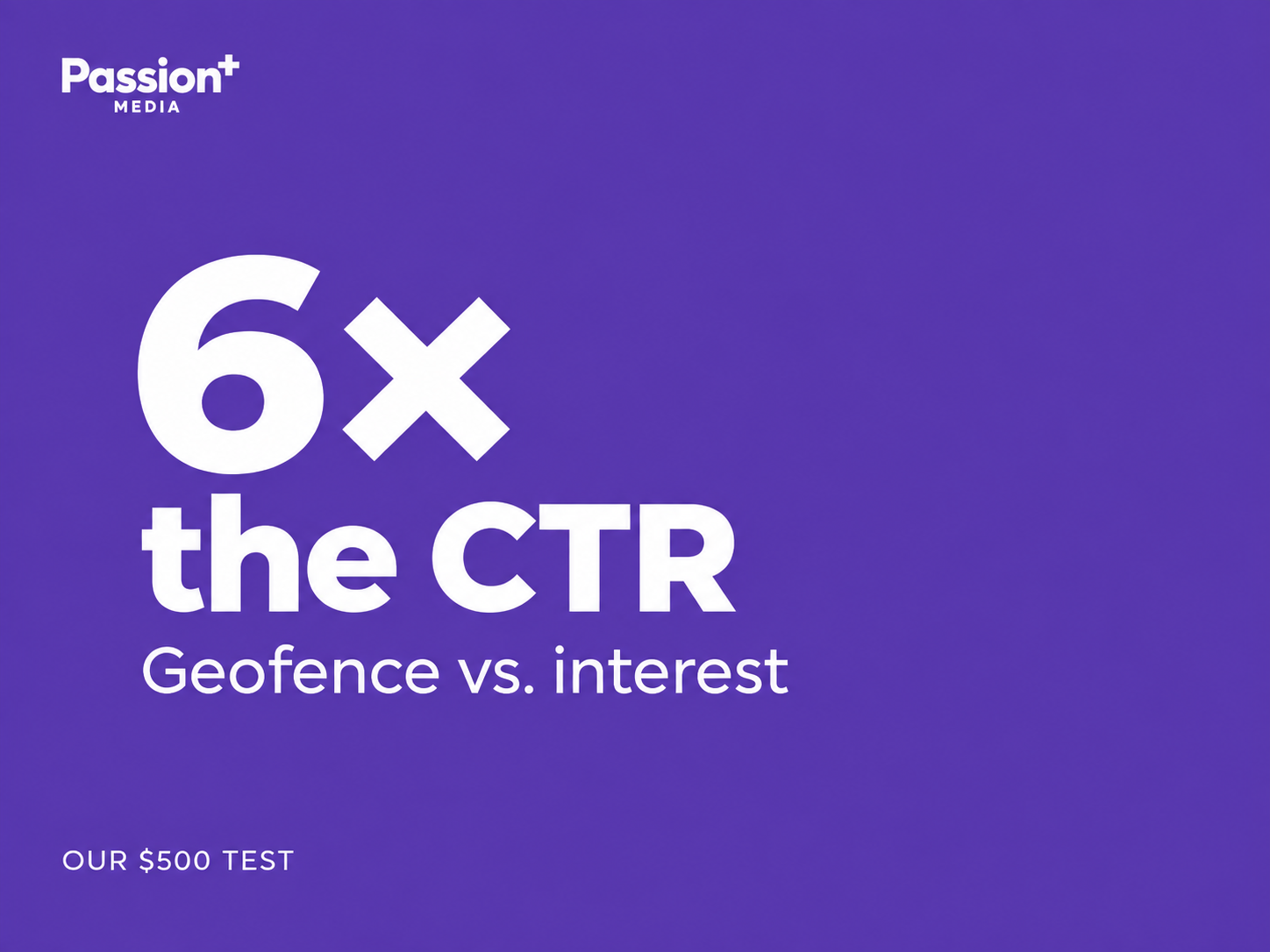
We ran $500 through our own product for our own brand. Here is the delivery and targeting breakdown. Geofence prospecting beat interest prospecting 6-to-1 on click-through rate, 0.43% versus 0.07%, with the same creative and publisher pool.
A $500 budget forces a choice: Meta ads or connected TV? A practical framework comparing what each channel proves, what it costs, and how to measure both honestly.