Ask a media kit who your customer is and you get "women 25–44, HHI $75k+." Ask your customers who they are and you get a completely different answer: they are sneakerheads, or clean-beauty people, or quiet-luxury people who resent logo mania.
Fashion and beauty are identity categories. Nobody buys a $180 serum because of their household income bracket; they buy it because of a theory about themselves. Interest-based audiences work in programmatic and CTV buying because they target that theory instead of the bracket. Here are the seven segments that consistently outperform for fashion and beauty advertisers, what they respond to, and what to expect when you buy them.
The most engaged community in fashion, with its own economy (drops, resale, raffles) and its own screen habits: heavy online video, sports-adjacent CTV viewing, discursive social behavior. They reward specificity. If your creative reads as "sneaker-adjacent lifestyle" rather than fluent in the culture, they scroll. Watch: skews male but not exclusively; overlaps heavily with sports and music passions. Entry cost: standard display/OLV CPMs; worth a dedicated creative set, not a shared one.
Early adopters who convert on novelty and speed: new arrivals, limited runs, "as seen at fashion week." They respond to fresh creative constantly, which makes them cheap to reach but expensive to keep (creative fatigue is brutal). Watch: pair with retargeting; this segment starts more purchases than it completes. Entry cost: low CPMs, high creative burn.
The "less but better" buyer: fabric stories, silhouette, tailoring, restraint. They actively distrust loud promotion, and creative that whispers (editorial pacing, no countdown timers) outperforms hard offers dramatically. This is also the segment where premium CTV context pays off most: they are the highest-income streaming household cohort and they notice what surrounds their viewing. Watch: longer consideration cycle; measure on 30-day windows. Entry cost: higher CPMs justified by AOV.
Motivated by materials, supply chain, and end-of-life claims, and the most claim-sensitive segment on this list. Back every assertion with a verifiable detail (certification, take-back program, factory disclosure) inside the ad itself; this audience screenshots vague claims. Watch: transparency converts better than aspiration here. Entry cost: standard CPMs; unusually high engagement rates offset creative caution costs.
Routine-driven, ingredient-literate, review-heavy buyers who follow the 10-step-to-3-step pendulum and read INCI lists. They respond to education-led video; a derm explaining niacinamide outperforms a glamour shot at the same CPM. Watch: this segment researches across screens for weeks; expect delayed branded search rather than same-day purchase. Entry cost: competitive CPMs (beauty is the most-bought category), offset by lifetime-value math. Retention is everything.
The fastest-growing beauty community online, now spanning Gen Z layering culture and classic connoisseurship alike. Scent cannot be transmitted digitally, so this segment buys on narrative and aesthetic world rather than product shots. Video context is everything; a fragrance ad in the wrong content context actively costs you trust. Watch: gifting seasonality spikes hard in Q4 and around graduations. Entry cost: premium CPMs for premium context, which is worth it when the context carries the product.
The demographic everyone else quietly excludes: confident buyers 45+ with the highest disposable income in the category, chronically underserved by creative that treats them as invisible. Representation alone is a differentiator, but they punish condescension ("ageless!" winks) faster than any segment on this list. Watch: strong CTV over-index (linear-plus-streaming households); direct response works when the offer respects them. Entry cost: underpriced CPMs precisely because competitors ignore the segment. Currently one of the best value buys in beauty.
Two honest caveats before you spend. First, segments are multipliers, not magic: a weak product story targeted perfectly is still a weak product story. Second, no fashion brand needs all seven. Pick two that match your actual customer and one adjacent passion for expansion (that's how passion-graph buying works: 327+ audiences mapped across CTV and open-web viewing behavior).
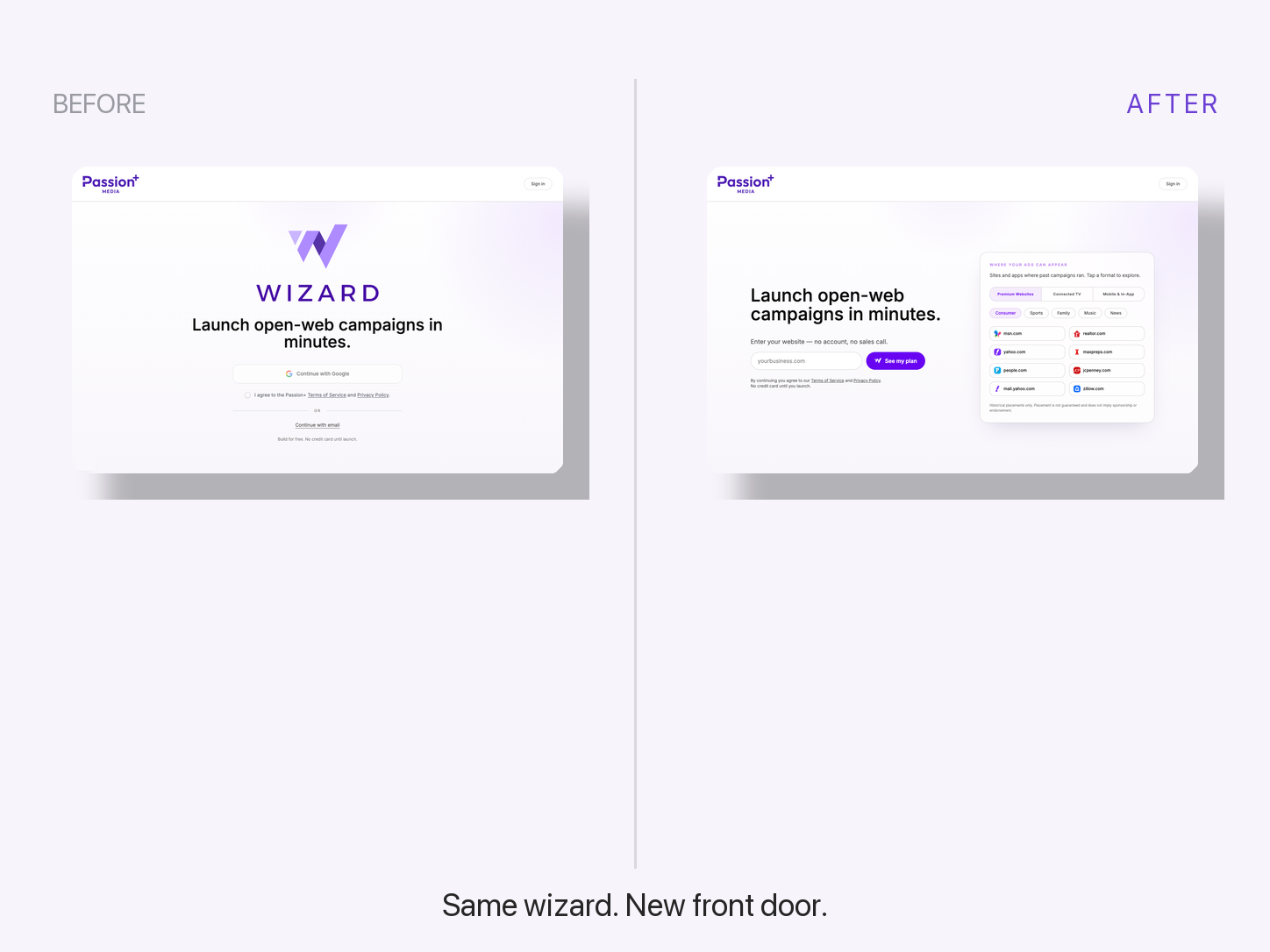
The practical shortcut: the Passion+ Fashion Wizard pre-curates these segments against your brand's category, price point, and timing, then drafts a full plan (formats, budget split, flight dates, estimated reach across 88M+ US streaming viewers) that you edit and approve. Entry plans start at $500, which is enough to validate one or two segments before scaling.
Start with the segment your best customers would self-identify with on day one. Expand only after it proves out.
Frequently asked questions
- Is connected TV advertising only for big brands?
- No. Programmatic CTV removed the historical agency minimums; platforms like the Passion+ Fashion Wizard offer fashion and beauty CTV plans starting at $500, targeted by audience segment rather than broad demographic buys.
- Do demographics still matter in fashion advertising?
- As a floor, not a ceiling. Age, gender, and geography still filter reach (and legal constraints like alcohol or pro-aging creative rules), but interest and culture segments like sneakerheads, quiet luxury, and eco-conscious shoppers consistently outperform demographics on engagement because fashion purchases are identity-driven.
- How many audience segments should a small fashion brand target at once?
- Two core segments that match your existing customers, plus one adjacent passion segment for expansion. Testing more than three at once makes results impossible to attribute at small budgets.
- What budget do I need to measure an audience segment properly?
- Enough for a 4–6 week flight with meaningful frequency, roughly $500–$2,000 per segment depending on screen mix. Below that, differences between segments are usually noise rather than signal.