CTV used to mean agency-scale commitments: six-figure minimums, locked rate cards, a media buyer on retainer. It doesn't anymore. Programmatic CTV lets a small brand run premium video on the biggest screen in the house from a test-sized budget.
This guide is written for the founder with $500 to $20,000 a month, not the enterprise buyer. Each tier below gets what it delivers, roughly what it costs per impression, and where brands get burned. Let's start with one number:
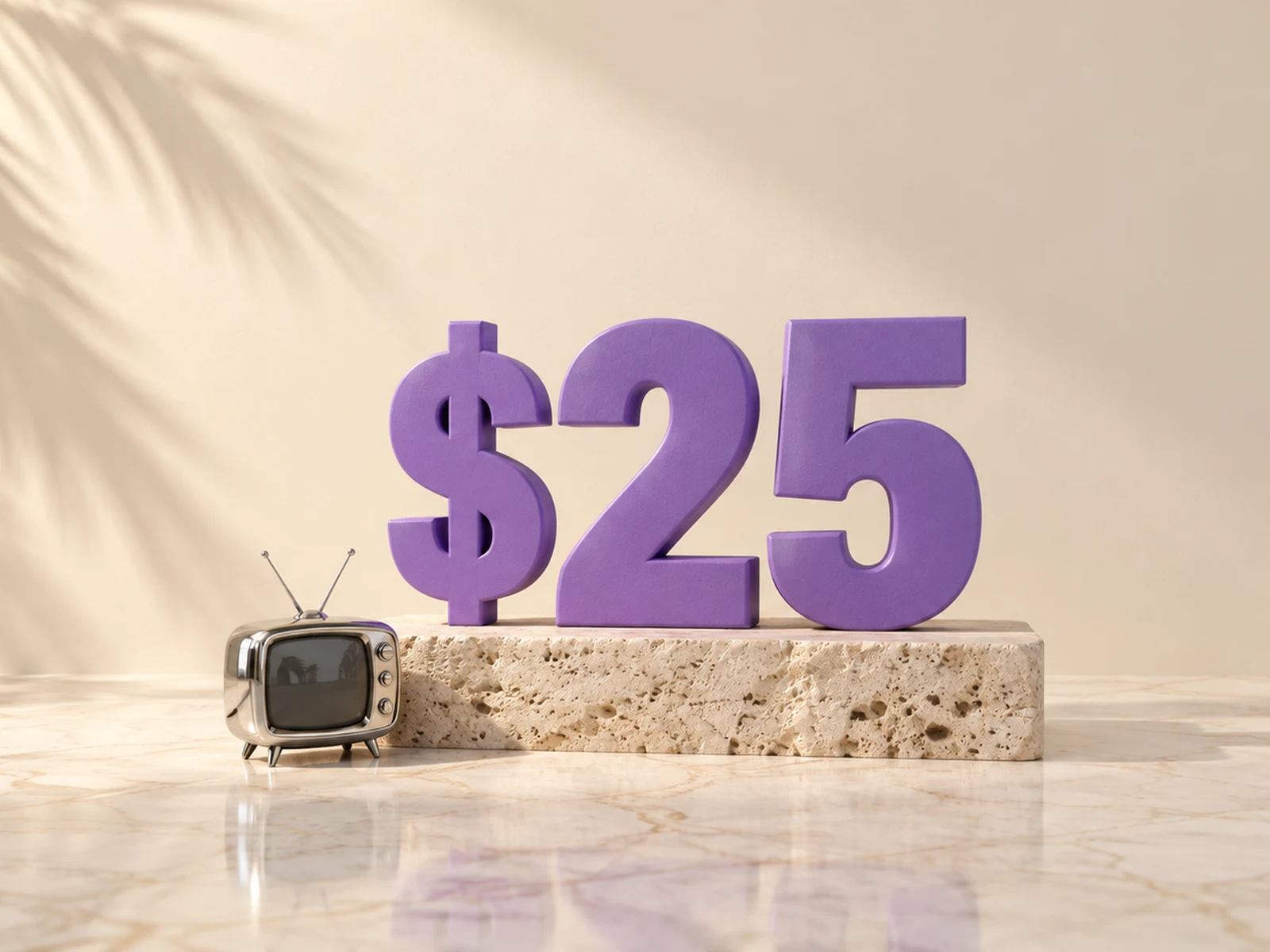
The average CTV CPM is about $20–$40, with most campaigns settling near $25. Those are planning bands published by AI Digital and Keynes Digital, both cited on Adwave's CTV CPM page. They are midpoints, not rate cards. Your live CPM moves with season, geo, format, and targeting, so plan with the band and check your delivery report after the first flight.
At a ~$25 CTV CPM, $500 buys roughly 20,000 video impressions. Blended with display and mobile it goes further. For example, our own $500 flight delivered 55,978 impressions at an $8.93 blended CPM across connected TV and display. That is enough to test one audience and one message over four to six weeks. Budget: $500, paced evenly so you can see how delivery behaves across the whole flight. The trap: judging video on clicks. Use branded-search lift during the flight instead.
This tier buys about 40,000–80,000 CTV impressions at a ~$25 CPM. Completion rates start to mean something here, and you can read a branded-search or direct-traffic lift on one or two audiences. Budget: $1,000–$2,000 per flight. The trap: spreading across too many audiences so none of them hits frequency. Pick the segment your best customers would self-identify with and let it repeat.
At ~$25 CPM, $5,000 buys about 200,000 impressions. You can run three to four audiences at once and still get frequency, add dayparting (prime versus daytime), and start optimizing the mix on data instead of a guess. Budget: $5,000 per flight or as a monthly line. The trap: scaling spend before the creative is proven. More budget on a weak spot just wastes more. Prove the message at $1,000 first.
This is where CTV stops being a test and becomes a program: 400,000+ impressions per month, flights that run across quarters, and room to layer retargeting and first-party data (which price higher, in the $35–$60 band). Budget: $10,000–$20,000 a month. The trap: doing it yourself stops paying off. At this scale, the hours you spend coordinating formats, audiences, and flight dates cost more than the fee you would save by skipping a managed service. That coordination is exactly what the Fashion Wizard does.
The table assumes a ~$25 CTV CPM. Blended buys (CTV plus display and mobile) deliver more impressions per dollar, as our own flight shows below.
| Budget | CTV impressions at ~$25 CPM | What you can test |
|---|
| $500 | ~20,000 | One audience, one message, four to six weeks |
| $1,000–$2,000 | ~40,000–80,000 | Meaningful frequency on one or two audiences |
| $5,000 | ~200,000 | Three to four audiences in parallel plus dayparting |
| $10,000+ | ~400,000+ | Always-on flights across months, with retargeting layered in |
The $25 midpoint is a starting point. Season moves it first: Q4 runs 20–40% higher than quiet months as holiday demand stacks up. Daypart comes next; prime evening windows price 30–50% above daytime. Targeting does the rest, because locking to TV screens only adds 15–25%, and each layer you stack pushes the band up further. The planning bands by targeting style, from the same Adwave page:
| Targeting style | Planning CPM band |
|---|
| Run-of-network | $15–$25 |
| Basic demographic or geo | $20–$30 |
| Behavioral / interest | $25–$40 |
| Multiple demographic layers | $30–$45 |
| First-party data matching | $35–$50 |
| Purchase intent or retargeting | $40–$60 |
These are planning ranges, not quotes. Start with the geo and audience you actually need, then tighten only when your delivery report says the wider net is wasteful. For how those audiences behave across screens, see our guide to fashion and beauty audience segments.
The ~$25 midpoint is what unmanaged auction inventory costs when you run it yourself. Running it yourself means picking a DSP, building audiences, wiring up data providers, capping frequency, and reading delivery reports. A managed plan bundles all of that: curated passion audiences (327+ mapped to real viewing behavior), DSP management, budget pacing, and reporting. So an effective CPM on a managed buy lands above the raw auction floor, often in the $40–$60 range once targeting layers stack. That is normal, not a markup trick.
The comparison that matters is total cost: a managed plan from $500 versus an agency retainer (typically several thousand dollars a month) or your own time running the buy end to end. At test budgets the plan is almost always cheaper than either alternative; at scale it removes the coordination work entirely.
The trap: comparing a managed rate to raw auction inventory and calling the difference a markup. You are not buying impressions alone. You are buying the audience selection, the execution, and the reporting around them. Judge the buy on branded-search lift and completion during flight, not on CPM points against an auction floor.
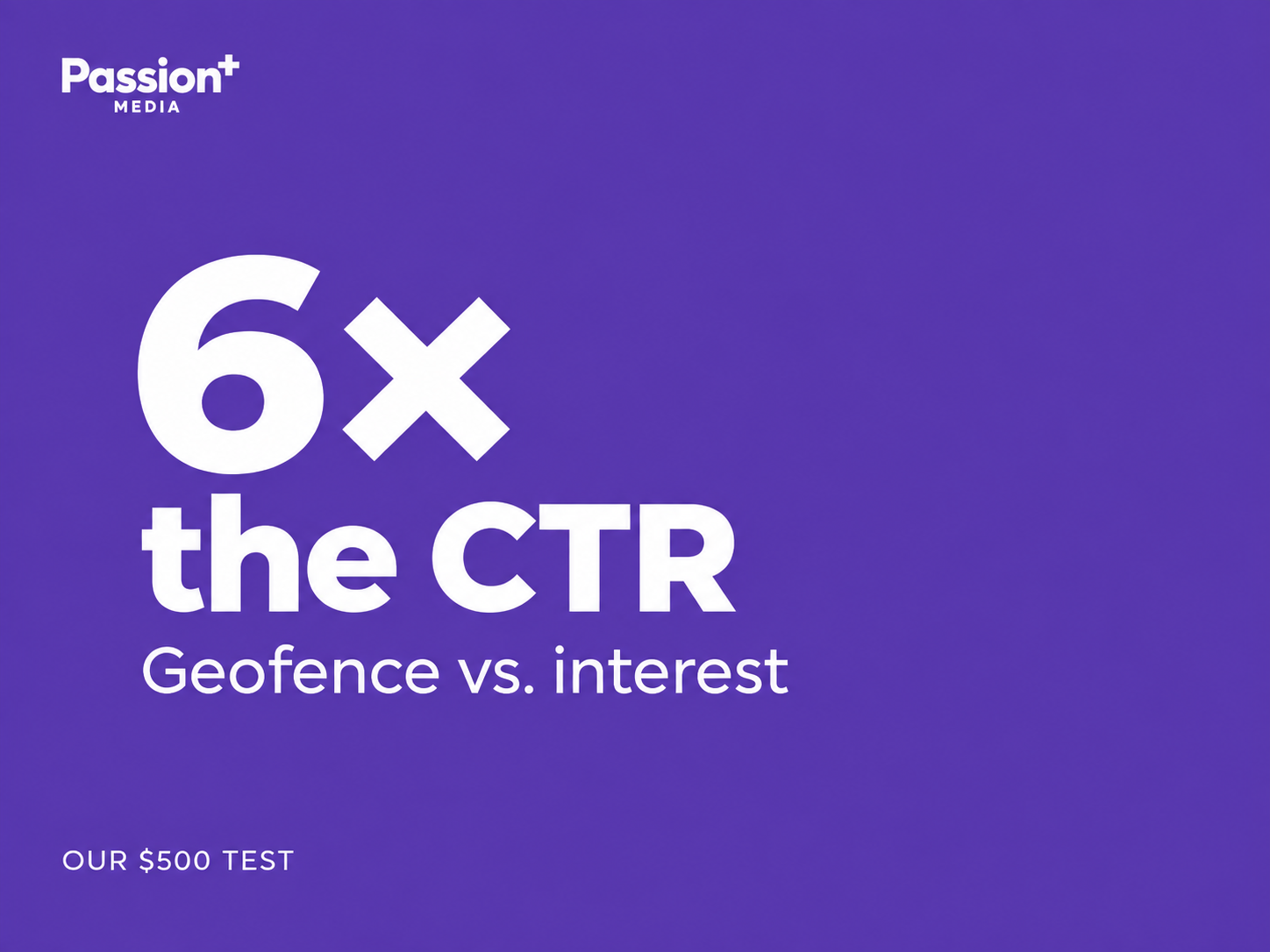
In late August we ran a $500 house campaign through our own product for our own brand, so the numbers below come from the same pipeline a client would use. The full breakdown is in our geofence versus interest campaign report. The cost-relevant lines:
| Line | Impressions | Spend | CPM |
|---|
| Display — geofence prospecting | 31,000 | $187.65 | $6.05 |
| CTV — fashion SMB audiences | 14,562 | $265.42 | $18.23 |
| Display — interest prospecting | 10,416 | $46.98 | $4.51 |
| Total | 55,978 | $500.05 | $8.93 |
The CTV line cleared at $18.23, below the ~$25 midpoint, because it was non-skippable inventory bought in a quiet month with broad-but-relevant targeting. Blending display pulled the whole flight to an $8.93 effective CPM, which is why a blended buy stretches further than CTV alone. This is one flight at one budget in one vertical, so treat it as a data point.
Start at $500 and give the test four to six weeks before you judge it. Read CTV on branded-search lift during flight, not last-click ROAS. Scale only after the creative proves out at a smaller budget, and move money toward the audience that repeats instead of the one that impresses in a single week. If you want the coordination done for you, start a Fashion Wizard plan from $500 with no agency minimums and edit it until it is yours.
Planning bands sourced from AI Digital and Keynes Digital as cited by Adwave (Q4 2025 refresh). First-party figures from the Passion+ house campaign, Pontiac DSP, Aug 19–31 2026.
Frequently asked questions
- How much does CTV advertising cost per impression?
- The average connected TV CPM is about $20–$40, with most campaigns settling near $25. That is a planning midpoint from named industry sources, not a single rate card. Your live CPM moves with season, geo, format, and how tightly you target.
- What is the minimum budget for a CTV campaign?
- Through programmatic buying there is no historical agency minimum. Test-sized flights start around $500, which is enough to evaluate one audience or one message over four to six weeks. Below that, sample sizes are usually too small to trust.
- How many impressions do I need to test CTV properly?
- Enough for a four-to-six-week flight with meaningful frequency on one or two audiences: roughly $500–$2,000 depending on screen mix. At a ~$25 CPM that is about 20,000–80,000 video impressions, which is enough to read a branded-search lift.
- Is CTV cheaper than traditional TV?
- Yes, in two ways. Programmatic CTV removes the six-figure agency minimums, so you can start at $500. Per impression it is usually pricier than social video because you are buying full-screen, sound-on inventory, but it reaches households in a lean-back context that mobile feeds do not.