Fashion and beauty brands are exceptionally good at making content. The hard part is turning attention into customers without burning cash on channels you never chose deliberately.
This list is written for the founder who has $500–$20,000 a month to work with, not the enterprise media buyer. For each idea we note what the channel is genuinely good at, roughly what it takes, and where brands get burned.
Send product to 10–20 creators in a tight niche (not "lifestyle" broadly; think petite workwear or clean-girl beauty) and negotiate usage rights so you can run their content as paid ads. Organic creator posts build trust; the same asset running as an ad typically outperforms brand-produced creative on click-through. Budget: product cost plus a usage fee. The trap: paying for reach when you should be paying for rights.
Cart and view retargeting is still one of the highest-ROI tactics in fashion because consideration cycles are visual and repetitive. Cap frequency hard (fashion creative saturates fast) and suppress converters quickly. Budget: 10–15% of paid media. The trap: letting retargeting take credit for demand your other channels created.
Search captures demand that already exists: "where to buy linen shirts," "sensitive skin retinol." Start with exact-match long-tail and product-specific terms before touching broad category keywords you will lose money on. Budget: from a few hundred dollars a month. The trap: bidding on your competitors' brand names early. Expensive, legally awkward, low loyalty.
Instead of only demographics, reach audiences defined by what they care about: sneakerheads, trend-first fashionistas, quiet luxury connoisseurs, eco-conscious shoppers, skincare obsessives, pro-aging beauty. Fashion purchase is identity-driven, so interest and culture segments often outperform demographic buys on engagement. This is the core of how Passion+ Media's audience graph works: 327+ passion audiences mapped to real viewing behavior. Budget: plans can start at $500.
CTV used to require agency-scale commitments. It no longer does: programmatic CTV lets a fashion brand run premium video on the biggest screen, targeted by household audience, with plans starting around $500. CTV builds reach and recall, so measure it with lift in branded search and direct traffic during flight, not last-click ROAS. Budget: $2,000+ per flight for meaningful frequency. The trap: judging video on click metrics.
Publish styling content ("the capsule wardrobe," "gifts for the new mom") that answers a question search engines and AI assistants actually get asked, then link products inside it. This compounds: every guide keeps working after the ad budget stops. Budget: content time only. The trap: writing for keywords instead of for humans; thin SEO content is ignored by both readers and AI answer engines.
Fashion email win rates are decided by relevance: back-in-stock, size exchange follow-ups, and style-profile quizzes beat generic newsletters. A two-question quiz ("what's your fit frustration?") lifts conversion on every send after. Budget: near-free; the cost is discipline in segmentation. The trap: blasting discounts to full-list, training customers to wait for sales.
Fashion lives in the real world: shows, markets, festivals, gym communities. Geo-targeted mobile and CTV around events where your customer already gathers picks them up at peak identity salience. Passion+ builds these around cultural IP like festivals and fan zones. Budget: from $1,000 per event window. The trap: targeting a city instead of a moment.
A swimwear brand and a beach-club playlist; a sneaker label and a running community. Splitting media behind one bundle doubles effective reach per dollar and borrows trust. Budget: shared, so lower than going alone. The trap: partnering with brands at a different price tier, which always shows.
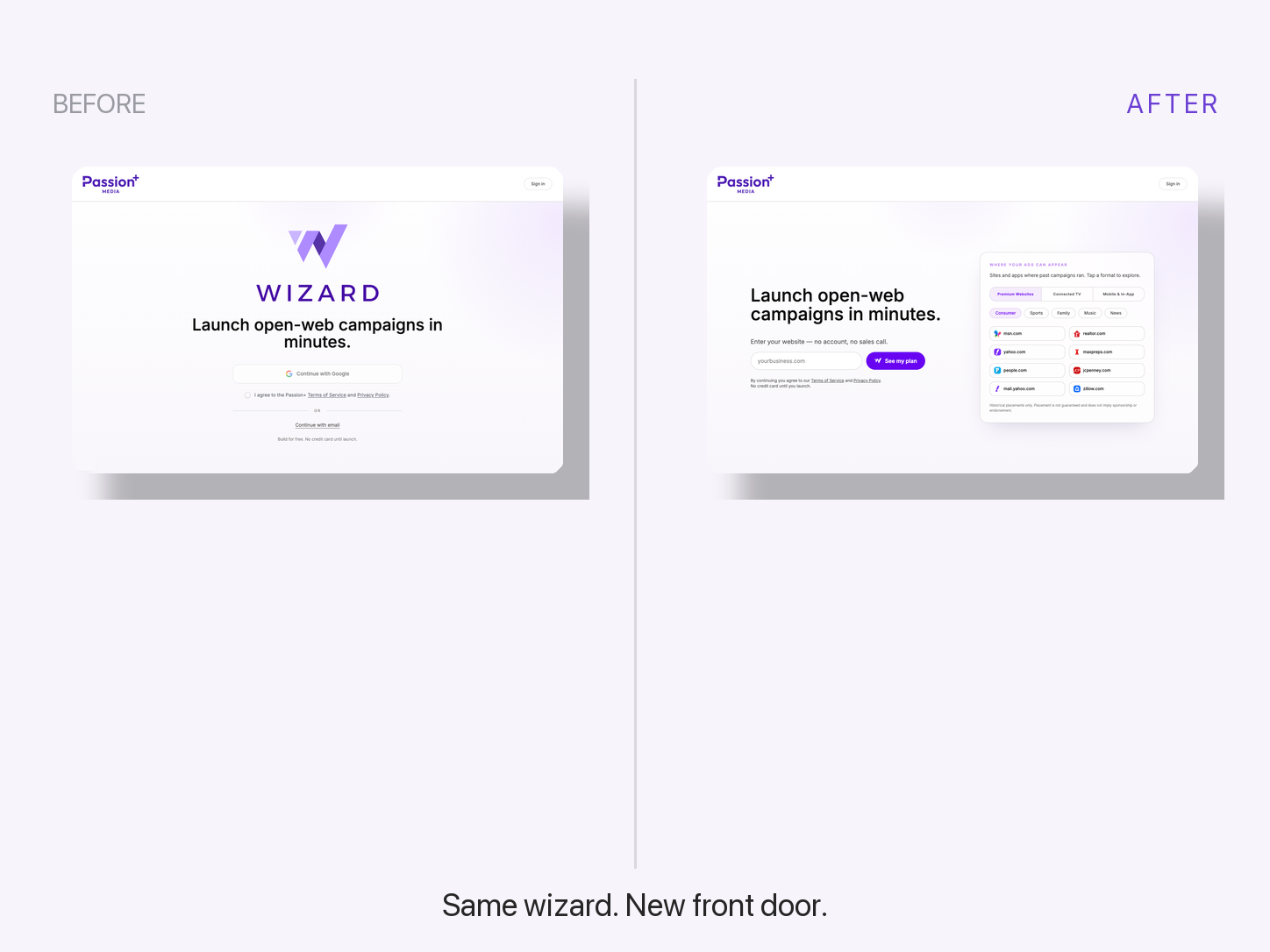
Everything above works better when formats, audiences, flight dates, and creative are planned together rather than bought channel-by-channel. This is what the Passion+ Fashion Wizard does: answer a few questions about your brand, audience, timing, and budget, and get an editable media plan across CTV, online video, and display (curated audiences, budget split, flight dates, estimated reach), starting at $500 with no agency minimums.
Pick one demand-capture channel (search or retargeting), one demand-creation channel (creators or passion-audience video), and give the test 4–6 weeks before you judge it. If you want the coordination done for you, start a Fashion Wizard plan and edit it until it's yours.
Frequently asked questions
- How much should a small fashion brand spend on advertising?
- Most early fashion brands learn fastest by testing with a fixed budget over 4–6 weeks rather than a percentage of revenue. A $500–$2,000 test is enough to evaluate one channel or one audience properly; below that, sample sizes are usually too small to trust.
- Is connected TV advertising realistic for small beauty and fashion brands?
- It has become accessible at much smaller budgets than the historical agency minimums. Platforms like the Passion+ Fashion Wizard offer CTV-inclusive plans starting at $500, aimed at brands that were previously priced out of premium video.
- What is passion-based audience targeting?
- Passion-based targeting groups audiences by interests and culture (sneaker culture, quiet luxury, eco-conscious shopping, skincare routines) rather than only age, gender, and zip code. It works especially well for fashion and beauty because purchase decisions in those categories are identity-driven.
- Which advertising channel has the best ROI for fashion brands?
- No single channel wins at every stage. Search captures existing demand, paid social creates discovery, creators build trust, and CTV or online video builds reach and brand recall. Brands that coordinate two or three of these outperform brands that maximize one.