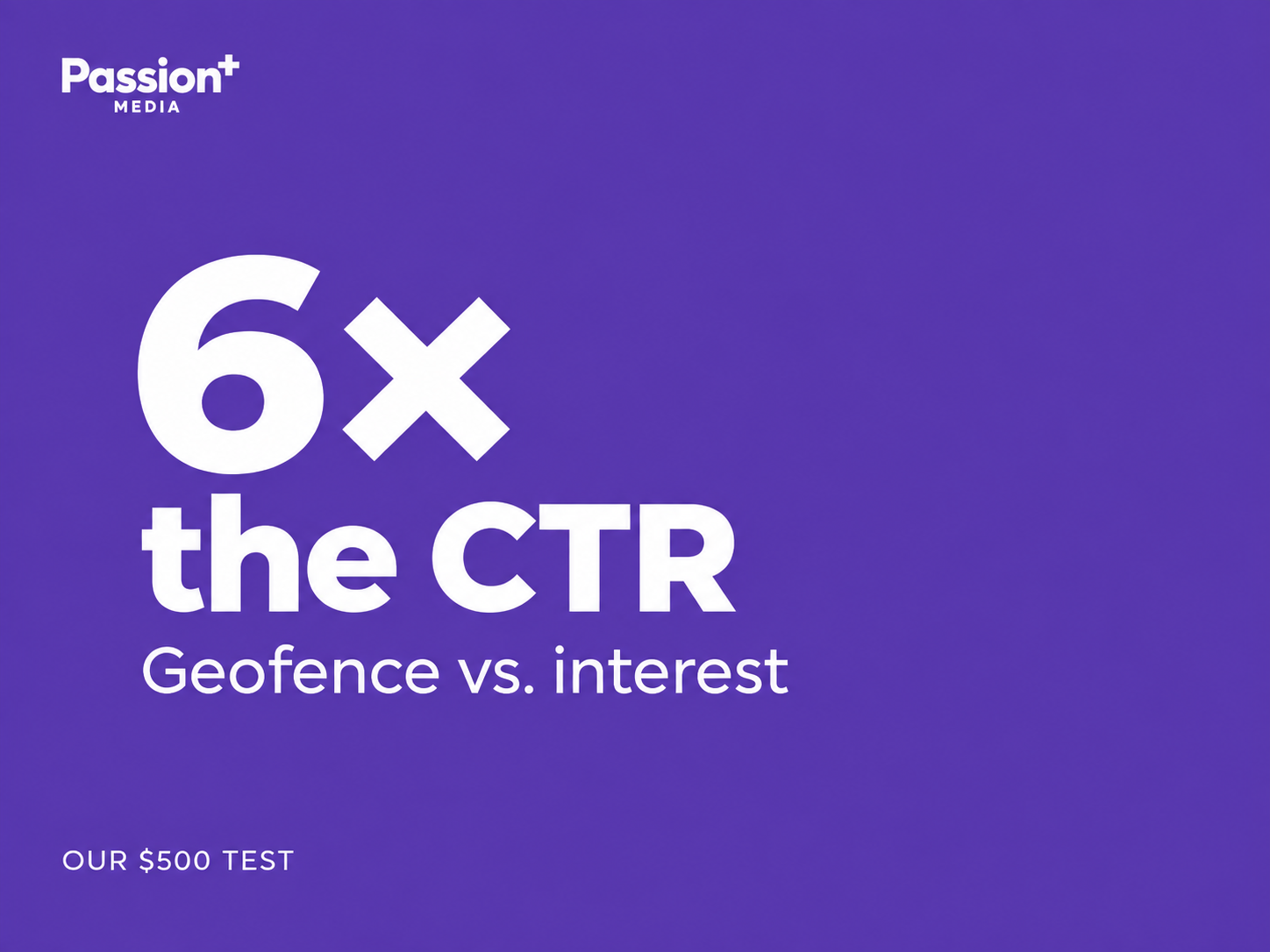
We sell a tool that buys media for brands. It starts at $500. In August we ran our first house campaign. We spent $500 through our own Wizard. The delivery report is here: 55,978 impressions at an $8.93 CPM. Ads aimed at real places beat ads aimed at broad interests 6-to-1 on clicks. The buy worked.
But the buy was half the test. A campaign answers "did the ads work?" It can't answer: the clicks came. Where did they go?
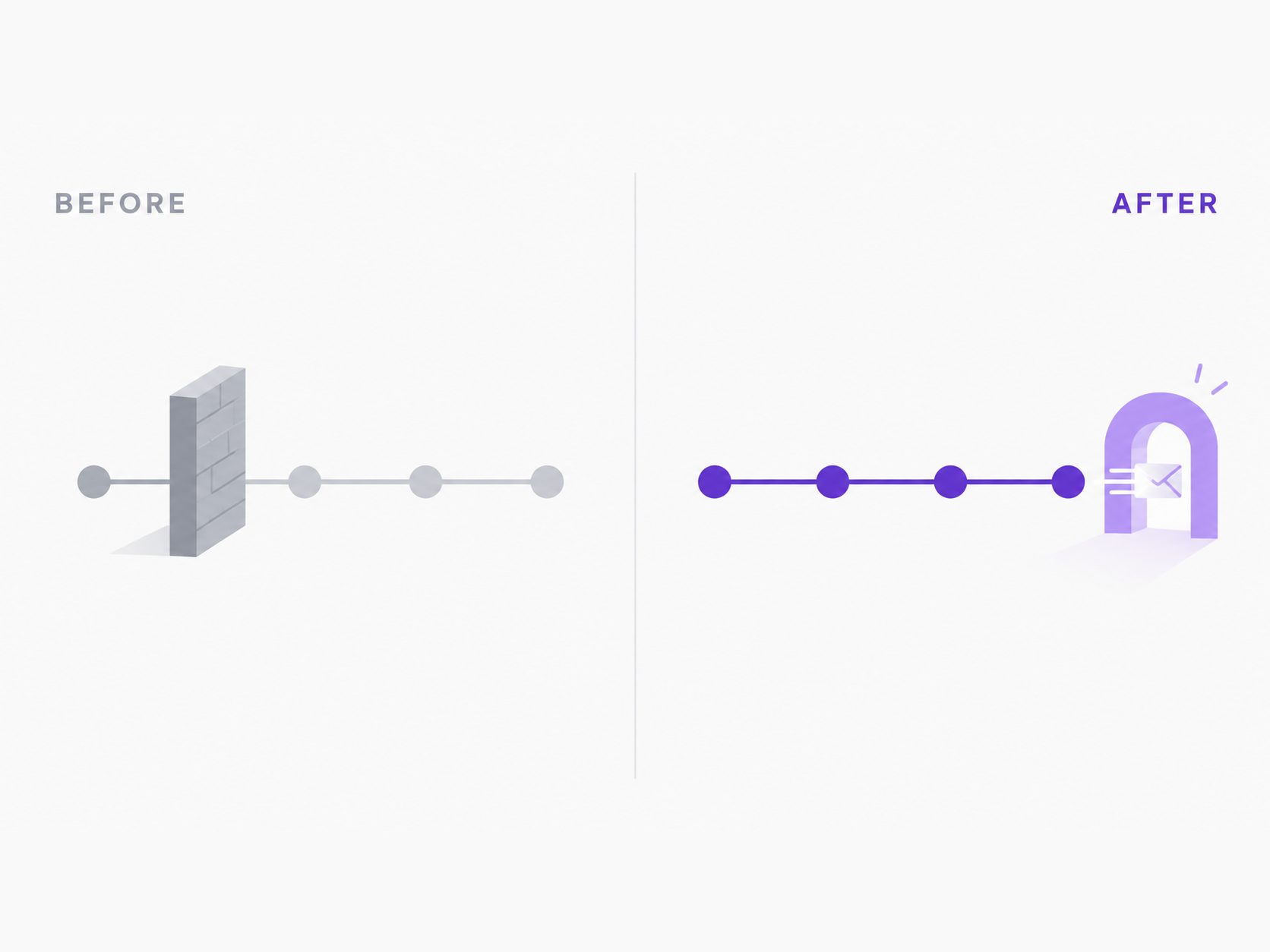
The landing page had one real door: "Book a Demo." Cold traffic saw it as a locked door — the demo ask converted the way a cold calendar invite always does: it didn't. A stranger thirty seconds off an ad isn't ready to book a call, and the data said so plainly.
Three walls stood behind that number. Each one shows up in the event data:
- The ask itself. A calendar call is the biggest ask a stranger can make on a landing page. It takes time, a talk, and a sales process. Cold traffic does not owe you thirty minutes, and it didn't offer them — demo and contact clicks stayed flat against the traffic we sent.
- Login before value. The Wizard behind the landing page opened on a login screen. No one saw a plan before giving up an email. The funnel lost everyone at step zero.
- The hidden door. You could try the product without a demo, but you had to find it through small links in the page corners. Almost no one used them. The self-serve path was barely there.
One note on scale: at our traffic size, conversion rates are noise. We can't A/B test to a lift number at this volume. What we can read at any size is how things work: Is there a door? Does value come before the ask? Does the page work on a phone in a feed? You can check that anywhere. Lifts need more traffic. So this post is about how it works.
The usual fix for a leaky funnel makes the form feel better: fewer fields, better words, trust marks by the button. Our data said the problem was not the form. It was where the ask sits in the journey: at the front, before the user has anything. A gate up front turns interest into nothing. A gate at the end gets an email from a user who already wants the plan.
Most wizard designs gate first "to capture leads." We flipped it: build value first, then let the user give an email to keep what they made.
The new Fashion Wizard journey starts with one input: your brand's URL. It goes straight into a chat. That chat looks up your brand and builds a real media plan. The email gate now sits at the very end, where there is value to claim.
Before
Landing page→“Book a Demo” / login wall→Wizard→Plan→Checkout
After
Enter brand URL→Chat builds persona + plan→Plan review→Sign in to keep it→Campaign live
Each change below ties to one clear finding, not taste:
1Trial-first landing on mobile — URL input above the fold, straight into chat
WhyThe demo ask got almost no clicks from cold traffic, and no clear self-serve door existed.
2No login before the first value moment — login moved post-plan
WhyThe login-before-plan flow lost everyone at step zero.
3Email gate moved — “sign in to keep your plan”
WhyGate position, not form length, was the friction — the claim moment gives the email ask a reason.
4Broken trial sessions auto-recover, with “Start over” in the account menu
WhyA broken trial was a dead end for someone who had already spent minutes.
5Mobile load and input pass — iOS zoom on inputs, card overflow, loading states
WhyCold mobile traffic leaves before a page is usable.
This flow is live now on passionplusmedia.com/fashion. It serves real traffic, including the next campaign's.
A popular stat says email-only forms convert 50–70% higher. No real study backs it. The number changes with every repost.
What does hold up:
One well-known test cut fields and lost 14% of finished forms. Cutting alone does not fix a bad gate. That is why we moved the ask instead of shaving steps.
We built tracking in before the next flight spends a dollar:
- Per-door tracking. Every button reports its spot on the page, so the next report says which doors make plans instead of guessing.
- End-gate conversion. Plans finished vs emails captured at the claim moment — we can measure it because we have the old flow's numbers.
- Cleaner data. Our own-traffic filter goes on before flight two, so those numbers will be cleaner than anything quoted here.
- One note for the detail-obsessed: our DSP counted about twice as many clicks as our analytics logged sessions from the same ads — a click-to-session gap that's common when tracking fires after a fast bounce or a slow mobile load. We're reconciling the two now, and we'll report what closes it.
Conversion outcomes are tracked in our system; at this scale they're noise rather than signal, so we don't report them. We publish how it works either way, flops included.
- Live, not proven. The rebuild is new. We claim no lift yet. Flight two's report will say more, whatever it shows.
- Upper-bound world. Our data included our own team and dev traffic. So this post uses words, not raw user counts.
- How it works, not proof of lift. At this scale we can check a path exists and watch its direction. We can't measure a sure lift. We won't pretend the changes above prove one.
- Self-run, self-reported. We built the tool and ran the campaign. We read our own data. The DSP export in the flight-one report is third-party. This read is ours.
- The gate trade-off is open. Value-before-gate may trade lead volume for lead quality. Fewer emails, but each one is more committed. Flight two will show which way it lands.
The pattern holds. If cold traffic ignores your demo button, the problem is where the ask sits, not its words. Give the front of your funnel value that costs a visitor nothing. Put the email ask where real work is done and worth keeping.
That's what the Fashion Wizard does now. Enter your brand's URL. Get a real audience read and a real media plan from $500. No login until you want to keep it. No long contract, no demo call. Want to talk to a human? That door still exists.
Where should a first budget go? That is its own question. Our breakdown of CTV versus Meta ads for fashion brands covers what each channel proves at test size. The audience segment guide prices each choice.
Data sources
- GA4 event data for passionplusmedia.com (our own traffic included)
- Pontiac DSP campaign 14699
- Our own intake tables
Form research
Frequently asked questions
- Should you require signup before or after a free tool?
- After, when there's something to keep. A gate up front turns interest into nothing. The user has not seen what the email buys them yet. Gate at the value moment — download, claim, checkout — and the ask has a reason. Front gates only win when the value is obvious first. A newsletter works that way.
- Why do demo calls convert badly with cold traffic?
- A calendar call is the biggest ask on a landing page. It takes time, a talk, and a sales process. The visitor came from an ad thirty seconds ago. They do not owe you thirty minutes. Give them a path that asks for nothing and makes something real. Save the call for warm visitors.
- When should you ask for an email address in onboarding?
- When the user has something they want to keep. Form research keeps finding this: where and when you ask matters more than how many fields there are. An email ask tied to keeping finished work gets emails. A cold capture at step zero does not.
- What changed in the Fashion Wizard between campaign flights?
- The landing journey is trial-first. Enter your brand's URL and go straight into a chat. It looks up the brand and builds a real media plan. No login needed. The email gate moved from the front door to the claim moment. First sign-in now leads with email, not Google. Broken trials auto-recover. Mobile load and input got a full pass. Every button now reports its spot in the data. The next flight will show which doors make plans.